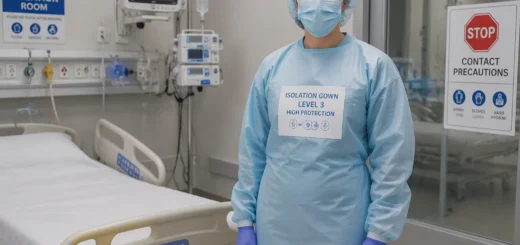
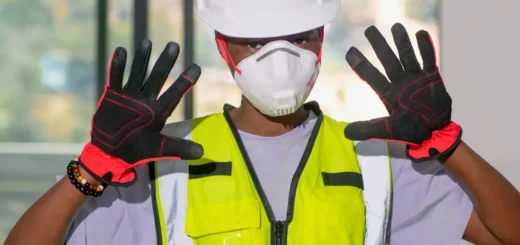
AAMI Level 4 Isolation Gown OEM and Private Label Manufacturing for US Buyers
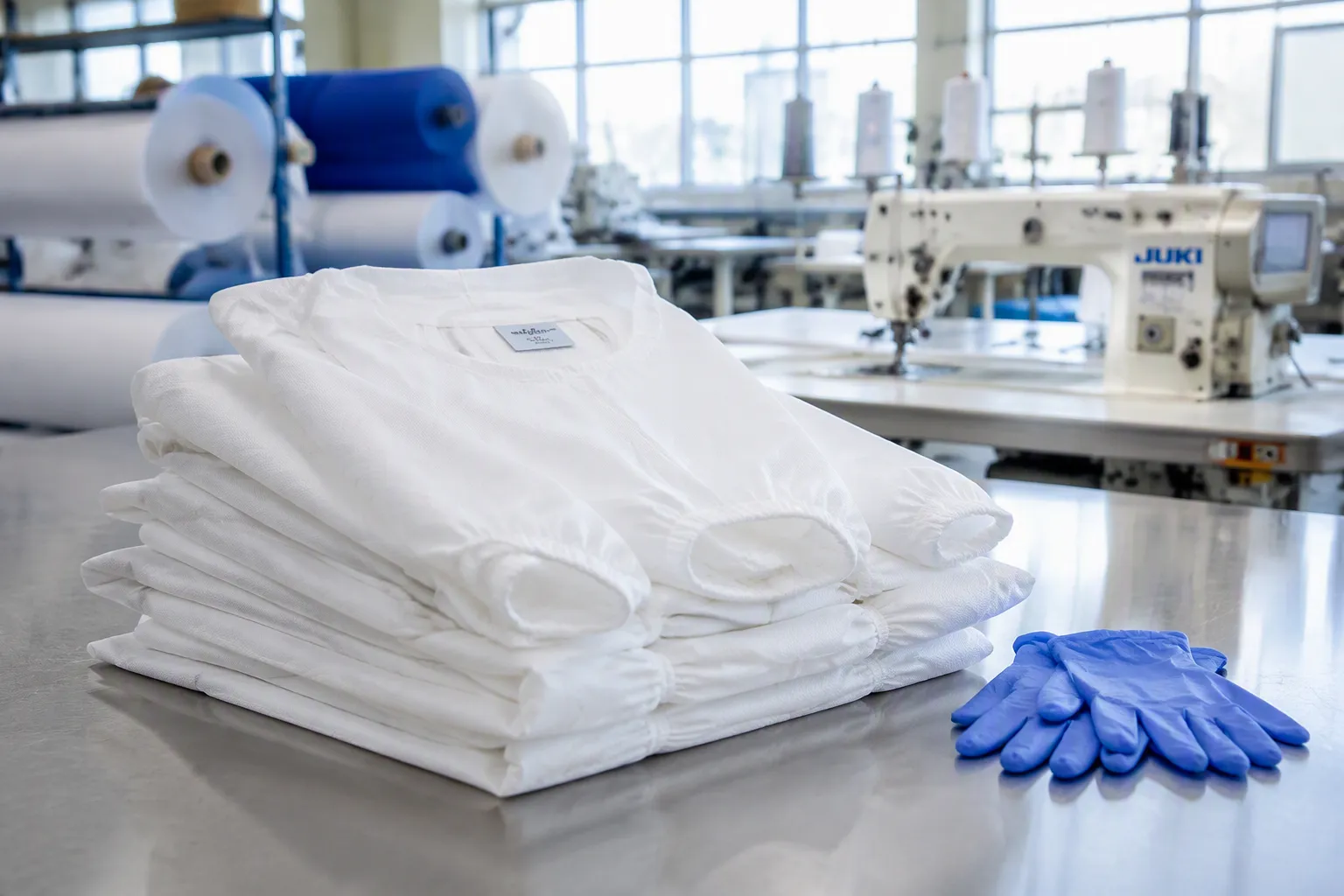
You need an AAMI Level 4 isolation gown manufacturer who follows FDA rules, offers customization, and keeps costs low. Finding that isolation gown manufacturer is hard. AAMI Level 4 Isolation Gown OEM and Private Label Manufacturing for US Buyers solves this problem. This isolation gown manufacturer makes disposable isolation gowns to your specs. That isolation gown manufacturer handles your brand. You get compliant products from a reliable isolation gown manufacturer. Key factors include AAMI certification, material quality, and lead times. A good isolation gown manufacturer guides you through sourcing. The U.S. disposable isolation gown market demands medical PPE that works. This isolation gown manufacturer delivers disposable isolation gowns for hospital procurement teams. Your isolation gown manufacturer provides personal protective equipment solutions. Choose an isolation gown manufacturer with proven expertise. That isolation gown manufacturer ensures your success.
Key Takeaways
AAMI Level 4 is the highest protection level for isolation gowns. They are tested to block blood and viruses.
Pick a maker that has FDA 510(k) clearance and ISO 13485 certification to ensure quality.
Check that each batch has test reports, such as ASTM F1670 and F1671, to confirm it meets the rules.
OEM manufacturing lets you make the fabric, sizing, and packaging just the way you want them.
Private label manufacturing puts your brand on a gown line that already exists, so you can enter the market faster.
Check what the manufacturer can produce, how long orders take, and how they help after the sale. This helps make sure you always have enough supply.
You can balance quality and cost by ordering in large amounts and making your gown specifications the same.
Use the right steps to put on and take off the gown. This stops germs from spreading and keeps you safe.
AAMI Level 4 Standards and Certifications
AAMI PB70 Levels Explained
Picking the right barrier level for your disposable isolation gown begins with knowing the ANSI/AAMI PB70 standard. This standard puts gowns into four clear levels. The levels are based on how well they block liquids and viruses. You need an isolation gown manufacturer that can prove the required level.
Level 1 Through Level 4 Barrier Ratings
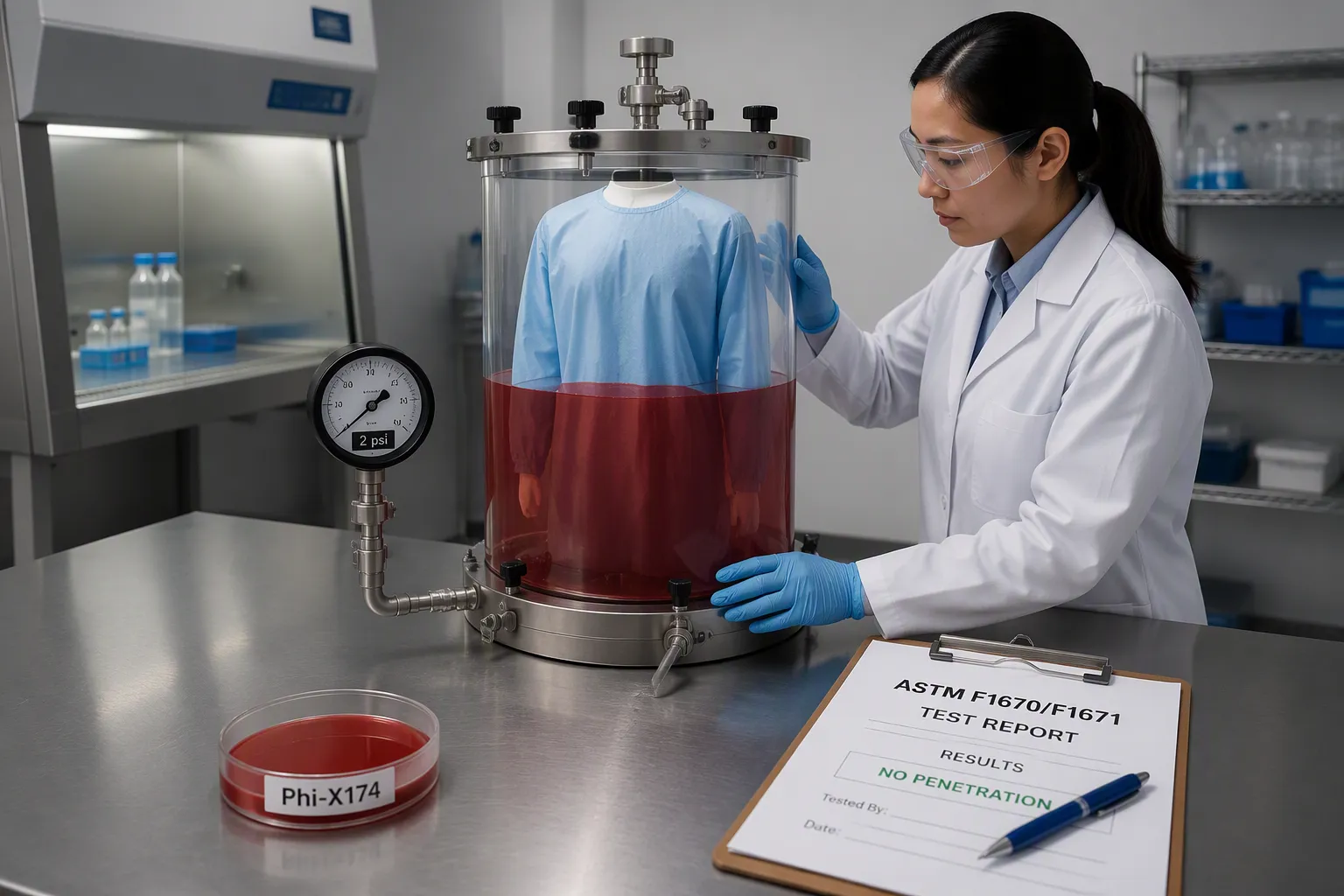
The four AAMI protection levels match up with growing fluid resistance. Level 1 gives minimal barrier and works for basic care or visitor use. Level 2 gives low-level protection for tasks like blood draws or suturing. Level 3 gives moderate protection when there is some splash or spray risk. Level 4 is the highest barrier rating. It gives the most protection against fluids, blood, and viral penetration. The key difference is in the testing requirements. AAMI Level 2 gowns must pass a hydrostatic pressure test (≥ 20 cm of water), and Level 3 gowns need ≥ 50 cm. But an AAMI Level 4 gown must show no penetration of synthetic blood or a viral surrogate (bacteriophage Phi-X174) at a pressure of 2 psi (13.8 kPa) when tested under ASTM F1670 and ASTM F1671. This is a much harder challenge. You can see the comparison in the table below.
Barrier Level | Test Method | Requirement |
|---|---|---|
Level 2 | AATCC 127 Hydrostatic Pressure | ≥ 20 cm of water |
Level 3 | AATCC 127 Hydrostatic Pressure | ≥ 50 cm of water |
Level 4 | ASTM F1670 Synthetic Blood Penetration | No penetration at 2 psi (13.8 kPa) |
Level 4 | ASTM F1671 Viral Penetration | No penetration at 2 psi (13.8 kPa) |
Why Level 4 Matters in Clinical Use
Most disposable isolation gowns used in US hospitals and surgical centers are AAMI Level 4. You need this level for high-risk procedures where contact with blood, body fluids, or infectious agents is likely. These gowns come in both sterile and non-sterile options. Sterile disposable gowns are a must for the operating room, while non-sterile Level 4 gowns are common for intensive care units, emergency departments, and isolation wards. Choosing Level 4 gives your clinical staff the highest barrier protection available for a disposable gown. Your isolation gown manufacturer must produce to this standard to meet hospital procurement requirements.
Required Certifications for US Buyers
When you source from an isolation gown manufacturer, you must check that they hold specific certifications for the US market. These documents prove regulatory compliance and product safety.
FDA 510(k) Clearance and Registration
For a gown to be legally sold in the United States, the manufacturer must send a premarket notification, called a 510(k), to the FDA. This shows the product is substantially equivalent to a legally marketed device. You should ask your isolation gown manufacturer for proof of 510(k) clearance for their AAMI Level 4 gowns. Also, the manufacturing facility must be registered with the FDA as an establishment. Major US suppliers like Cardinal Health hold 510(k) clearance for their AAMI Level 4 gowns, setting a clear market benchmark. Your manufacturer should match this level of compliance.
ISO 13485 and Quality System Compliance
ISO 13485 is an international standard for quality management systems specific to medical devices. A certified manufacturer has a strong system for design, production, installation, and servicing. This certification is critical for ensuring consistent product quality and batch-to-batch uniformity. You should make ISO 13485 certification a prerequisite when evaluating any potential isolation gown manufacturer for your supply chain.
21 CFR Part 801 Labeling Requirements
The FDA also requires specific labeling rules under 21 CFR Part 801. Your manufacturer must label each gown carton with proper identification, the manufacturer name and place of business, and an adequate warning statement. The label must also include the intended use and any precautions. A compliant manufacturer will provide labeling that meets these federal standards, protecting you from regulatory issues.
Verifying Manufacturer Compliance
Proving compliance takes more than looking at a website. You need to ask for and review specific documents from your chosen isolation gown manufacturer.
Test Reports and Certificates of Analysis
Ask for a Certificate of Analysis (CoA) for every production batch. This document should show the results of key tests. You should also request third-party lab reports from accredited organizations like SGS. These independent reports are the main evidence that comes with a shipment. The key tests you need to see in these reports include:
ASTM F1671 (Viral Penetration Resistance)
ISO 16603 (Liquid Barrier Performance)
EN 20811 (Hydrostatic Pressure Test)
EN ISO 13935 (Seam Strength)
These documents give objective proof that a disposable isolation gown meets the AAMI Level 4 standard.
Factory Audits and Traceability Records
A reliable manufacturer will welcome a factory audit, whether virtual or in-person. During an audit, you can review their quality management system and production processes. You should also check their traceability system. Every batch of raw material and finished gowns should be traceable from receipt to shipment. Strong traceability records from an isolation gown manufacturer ensure you can quickly isolate and address any quality issue that arises in your supply chain.
Disposable Isolation Gown Specifications and Materials
Fabric and Barrier Technology
SMS, SMMS, and Microporous Laminates
The fabric you pick decides how well a disposable isolation gown blocks fluids. SMS fabric is made of spunbond, meltblown, and spunbond layers. The meltblown layer is the main barrier. SMMS adds an extra meltblown layer for even better protection. Microporous film laminates attach a thin film to nonwoven fabric. This mix gives the best barrier against liquids and viruses. An isolation gown manufacturer with AAMI Level 4 skills usually works with all three fabric types.
SMS fabric comes in different weights. A 35 gsm SMS fabric can hold a hydrostatic head of at least 30 cm H₂O. A 50 gsm SMS fabric reaches at least 50 cm H₂O. Heavier grades push the hydrostatic head up to 80 cm H₂O. Your isolation gown manufacturer should match fabric weight to the needed barrier level. AAMI Level 4 needs the highest fluid resistance. Microporous laminates often meet this standard best.
Fluid and Blood Penetration Resistance
Blood and fluid penetration resistance sets AAMI Level 4 apart from lower levels. Your isolation gown manufacturer must test every fabric lot against ASTM F1670 for synthetic blood and ASTM F1671 for viral penetration. Both tests run at 2 psi (13.8 kPa). No penetration is allowed. This is the key rule for medical protective wear in high-risk settings.
Hydrostatic pressure testing under AATCC 127 measures how much water pressure a fabric resists before leaking. Level 2 needs at least 20 cm of water. Level 3 needs at least 50 cm. Level 4 uses the ASTM F1670 and F1671 tests instead. Your isolation gown manufacturer should give you these test reports for every batch.
Construction and Design Features
Seam Types and Critical Zone Reinforcement
Seams are weak spots in any disposable isolation gown. An isolation gown manufacturer uses bound seams or heat-sealed seams to block fluid at the joints. Critical zones are the chest, sleeves, and front panel. These areas need extra reinforcement. Overhead-style gowns, like the AAMI 4 Overhead Isolation Gown, fully cover the back. This design removes gaps that tie-back gowns can leave open.
Sizing and Fit for US Healthcare Workers
Good fit keeps healthcare workers safe and comfortable. An isolation gown manufacturer should follow standard US sizing. The table below shows typical dimensions.
Size | Chest Size (inches) | Height Range |
|---|---|---|
Small | 34–36 | 5’2″ – 5’6″ |
Medium | 38–40 | 5’7″ – 6’0″ |
Large | 42–44 | 6’1″ – 6’4″ |
Extra Large | 46–48 | 6’5″ or taller |
Your isolation gown manufacturer should offer these sizes as standard. Custom sizing is available for special orders.
Performance Testing and Quality Control
In-House and Third-Party Testing
A good isolation gown manufacturer runs in-house tests on every production batch. These tests check seam strength, fabric weight, and barrier performance. Third-party labs like SGS give independent proof. You should ask for both in-house data and third-party reports. This two-step approach gives you confidence in the disposable isolation gowns you buy.
Batch Consistency and Defect Standards
Batch consistency tells apart a good isolation gown manufacturer from a bad one. Your manufacturer should track every roll of raw material. They must link each finished gown to its source lot. Defect standards should follow a zero-tolerance policy for barrier failures. The manufacturer must write down control steps for every stage. This discipline ensures that every shipment of disposable isolation gowns meets AAMI Level 4. Your isolation gown manufacturer should share these records openly. Strong quality control protects your patients and your brand.
OEM and Private Label Customization Options
OEM Manufacturing to Your Specs
OEM manufacturing means a gown maker builds disposable isolation gowns exactly how you want. You control the design, materials, and how they perform. This option works well for buyers who need unique products that stand out from standard ones.
Custom Fabric, Weight, and Sizing
You pick the fabric type and weight for your disposable isolation gown. A gown maker can produce them in SMS, SMMS, or microporous laminate. You set the fabric weight to match your barrier needs. Heavier fabric gives more protection. Your gown maker adjusts sizing for your target market. You can request custom chest size, sleeve length, and gown length. This flexibility helps you serve certain clinical settings.
Custom Packaging and Labeling
Your gown maker prints your brand name, instructions, and warnings on each package. You choose the label language, symbols, and regulatory text. The maker follows 21 CFR Part 801 rules for medical device labels. You can also pick packaging materials that resist moisture and tearing.
Private Label Branding and Packaging
Private label manufacturing lets you sell disposable isolation gowns under your own brand. The gown maker uses an existing product line. You add your logo and brand. This option moves faster than full OEM development. Many suppliers on ThomasNet offer private label for surgical and isolation gowns.
Logo Placement and Branded Packaging
Your gown maker can place your logo on the gown, the single wrap, or the big box. You choose where to put it to build brand recognition. Branded packaging helps medical customers find your product quickly. The maker handles artwork setup and print quality checks.
Retail-Ready and Bulk Institutional Options
You pick between retail-ready packaging and bulk institutional packaging. Retail-ready options have single sterile wraps with easy-open tabs. Bulk options ship in big cartons for hospital buyers. Your gown maker adjusts the packaging format to match your sales channel.
Design Customization Details
Cuff Styles: Knit, Elastic, and Thumb Loop
You pick the cuff style for your disposable isolation gowns. Knit cuffs give a soft, secure fit. Elastic cuffs offer a simple, cost‑effective seal. Thumb loop cuffs keep the sleeve in place during procedures. Your gown maker produces all three styles.
Closure Options: Tie-Back, Hook-and-Loop, and Snap
You choose the closure system that fits your clinical needs. Tie‑back closures give an adjustable fit. Hook‑and‑loop closures speed up putting on. Snap closures provide a secure, reusable‑style fastening. Your gown maker can combine closure types for better performance.
Color Options and Departmental Color-Coding
You choose from many colors for your disposable isolation gowns. Hospitals often use colors to separate departments. For example, you can give blue gowns to isolation wards and yellow gowns to emergency rooms. Your gown maker matches Pantone colors for brand consistency. This helps your medical customers manage inventory and staff training.
A reliable gown maker supports your OEM and private label goals from start to finish. You get custom disposable isolation gowns that meet AAMI Level 4 standards. Your maker handles the details. You build your brand. This partnership gives you a competitive edge in the US market for AAMI Level 4 Isolation Gown OEM and Private Label Manufacturing for US Buyers.
Choosing the Right Isolation Gown Manufacturer
Evaluating Production Capacity and Lead Times
Capacity, Scalability, and Communication
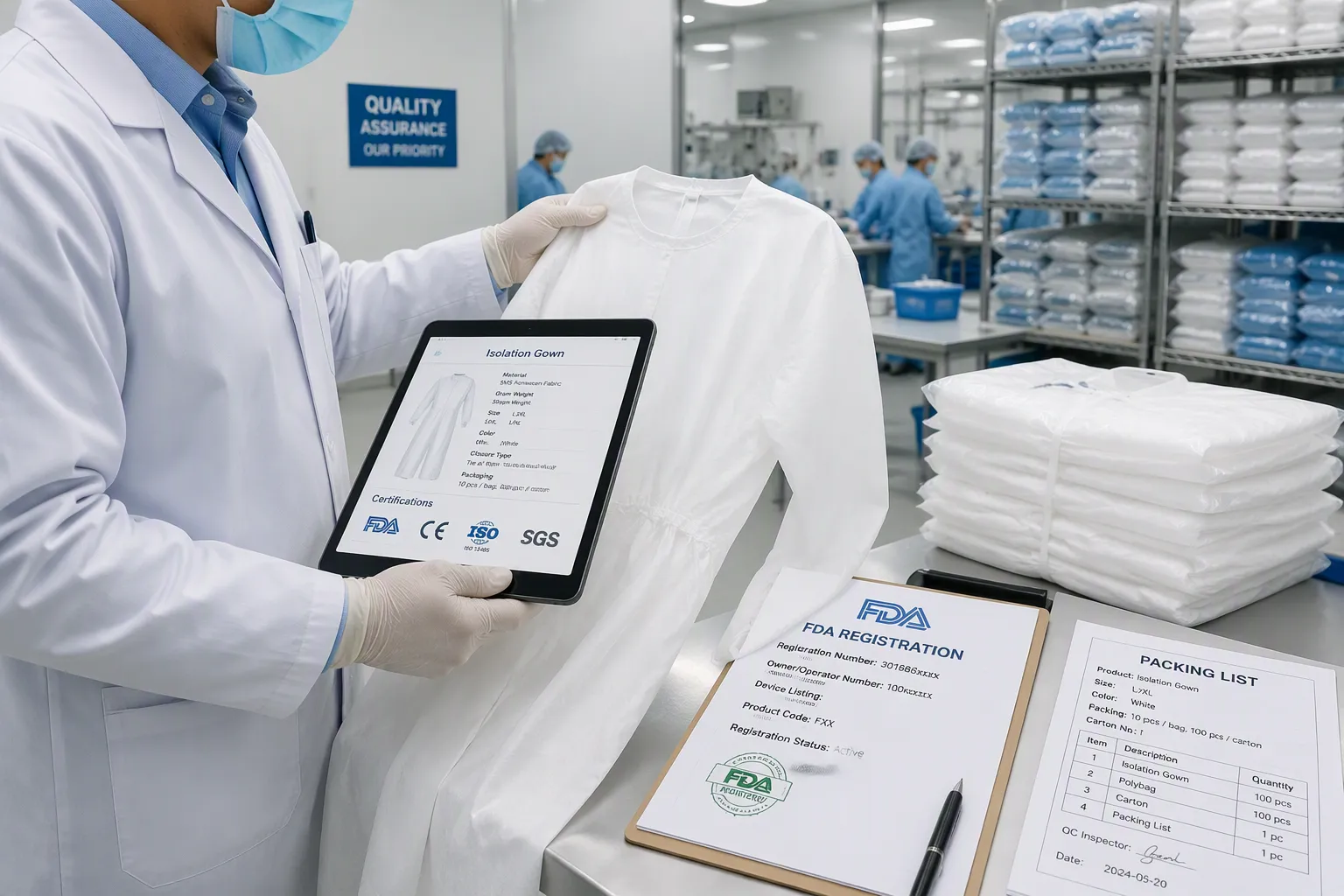
You need an isolation gown manufacturer that can fill your order on time. First, ask how many gowns they make each month. A dependable isolation gown manufacturer should make millions of gowns monthly. Find out if they run more than one production line. That way, they can ramp up when demand grows. How fast they reply shows how professional they are. A good isolation gown manufacturer answers emails within 24 hours. They give you a dedicated account manager for your project. This person answers questions about specs, pricing, and shipping. The Kare Lab and eztio are examples of certified manufacturers. They have ISO 13485, CE, and FDA registration. These certifications show they follow strict quality systems. You should ask for factory audit reports. A virtual tour can also show you how they work. A good isolation gown manufacturer proudly shows their facility.
After-Sales Support and Documentation
After-sales support is just as important as the first sale. Your isolation gown manufacturer should give you full paperwork for every shipment. This includes certificates of analysis, packing lists, and invoices. They must provide FDA registration numbers and 510(k) clearance letters. Ask about their return policy. A professional isolation gown manufacturer fixes defects fast. They swap out faulty products without delay. You also need traceability records. Every batch of disposable isolation gowns should trace back to raw material lots. This helps you handle recalls if a problem comes up. Your hospital procurement teams depend on this paperwork for compliance audits. A good manufacturer keeps these records for at least five years.
Pricing Factors and Cost Optimization
Material, Volume, and Customization Costs
Three main things control the price of disposable isolation gowns: material, volume, and customization. Fabric type is the biggest cost driver. SMS fabric costs less than microporous laminates. Heavier fabric weights also push the price up. Your isolation gown manufacturer can offer price breaks at different volume levels. Bigger orders lower the per-unit cost. Customization adds cost too. Adding a logo, changing cuff styles, or using special packaging raises the final price. You should get quotes for different combinations. This helps you find the best value. The u.s. disposable isolation gown market is competitive. Many top 10 disposable isolation gown suppliers offer tiered pricing. Compare quotes from at least three manufacturers before you decide.
Balancing Quality and Budget
You must balance quality and budget without cutting corners on compliance. AAMI Level 4 gowns need specific materials and testing. A cheaper gown that fails ASTM F1671 testing puts patients at risk. Your isolation gown manufacturer should not lower quality to meet a low price. Instead, look for savings in packaging or order volume. Bulk ordering lowers the cost per gown. Standardizing your order cuts customization fees. You also save on shipping by combining orders. A skilled isolation gown manufacturer helps you find these savings. They protect your budget and your reputation. Remember that aami protection levels are not negotiable. Level 4 means Level 4, no shortcuts allowed.
Comparing Gown Types and Intended Use
Isolation vs. Surgical vs. Procedure Gowns
Not all medical gowns do the same job. Isolation gowns protect staff and patients from infection spread. They are loose-fitting and cover the body. Surgical gowns give a sterile barrier for operating rooms. They have reinforced critical zones and are always sterile. Procedure gowns fall between the two. They protect during low-risk medical tasks. Each type has different barrier requirements. Your isolation gown manufacturer can make all three types. You pick the right gown based on the clinical setting. Isolation gowns are the most common for general hospital use.
When to Specify AAMI Level 4
You specify AAMI Level 4 when the risk of fluid or pathogen exposure is high. Use Level 4 in intensive care units, emergency departments, and isolation wards. Surgical teams also need Level 4 for major procedures. For lower-risk tasks, you can use Level 2 or Level 3 gowns. Level 1 is for basic patient care. Your isolation gown manufacturer should help you pick the right level. They should not push you to a higher level than you need. This keeps your costs down while keeping safety up. Always confirm that the manufacturer’s Level 4 gown passes ASTM F1670 and ASTM F1671 tests. Ask for the test reports. Your hospital procurement teams need this proof. The ppe you buy must protect your staff. Choose a manufacturer that values safety as much as you do. A compliant disposable isolation gown from a trusted manufacturer protects your brand and your patients.
Safety, Usage, and Compliance Guidelines
Donning and Doffing Best Practices
Your isolation gown manufacturer gives you step-by-step instructions with every order. Following the right order keeps staff and patients safe. One mistake when you take off the gown can spread germs to clean areas.
Step-by-Step Clinical Procedures
First, wash your hands. Put on the disposable isolation gown by sliding your arms through the sleeves. Pull the gown up over your shoulders. Tie the strings at your neck and waist. Your isolation gown manufacturer makes the closure system for easy tying and strong protection.
A coworker can check for gaps. The gown should cover your whole torso. The sleeves should reach your wrists. You should not see any bare skin on the front or sides. This kind of protection helps stop contact with fluids.
Avoiding Contamination During Removal
Taking off the gown needs just as much care. Untie the waist strings first. Then untie the neck strings. Pull the gown away from your shoulders. Roll the gown inward as you pull it down. Only touch the inside of the gown. Your isolation gown manufacturer tests the material’s strength so it will not rip when you take it off. Throw the gown away in a marked waste bin. Wash your hands right away.
The chance of contamination is highest when you take off the gown. Your isolation gown manufacturer gives you donning and doffing posters for your building. Hang these posters in every changing area. These posters help your staff remember safe habits.
Storage, Handling, and Disposal
Shelf Life and Storage Conditions
Keep your disposable isolation gowns in a cool, dry place. The best temperature is 15°C to 30°C. Keep the boxes out of direct sunlight and away from moisture. Your isolation gown manufacturer prints the production date on each box. Most disposable isolation gowns last two to three years from the date they are made.
Do not store gowns near chemicals or cleaning supplies. Chemical fumes can harm the barrier material. Your isolation gown manufacturer puts storage guidelines on the master carton label.
Disposal of Contaminated Gowns
Gowns that are contaminated are regulated medical waste. Put them in biohazard waste bags. Seal the bags the way your facility’s infection control policy says. Your isolation gown manufacturer cannot take back used gowns. Follow state and federal rules for medical waste disposal.
Your isolation gown manufacturer suggests working with a licensed waste disposal company. This makes sure contaminated ppe is handled the right way.
Training and Compliance Documentation
Staff Training Resources
Your isolation gown manufacturer offers training materials for clinical staff. These resources include instructional videos, donning and doffing posters, and quick reference cards. Use these tools during new employee orientation and yearly training.
Make a training log. Write down the date, the trainer’s name, and staff signatures. This log proves staff finished the training. AAMI standards require written proof of training for infection control audits.
Usage Records for Regulatory Audits
Track every box of disposable isolation gowns you get from your isolation gown manufacturer. Write down the lot number, production date, and expiration date. Note the vendor name and purchase order number.
Auditors look for traceability during inspections. Your records show you used compliant medical products from a certified supplier. Keep these records for at least three years.
Your isolation gown manufacturer helps you with paperwork. They give you certificates of analysis and FDA registration numbers for every shipment. You use these documents to build your compliance file. This AAMI compliance file proves your facility meets regulatory standards.
Manufacturer Product Range and Services
AAMI Level 4 Gown Product Line
Standard and Custom Configurations
A full-service isolation gown manufacturer gives you a complete range of AAMI Level 4 gowns. You can pick standard setups for fast delivery. These include overhead styles, tie-back designs, and gowns with knit or elastic cuffs. Standard sizes go from small to extra large. Each gown passes ASTM F1670 and ASTM F1671 testing requirements.
Your isolation gown manufacturer also makes custom setups. You choose fabric weight, seam type, and closure style. You can add thumb loops or make critical zones stronger. Custom gowns take longer to make. They give you a product that fits your clinical needs exactly. A good isolation gown manufacturer walks you through every option.
Companion PPE Products
Your isolation gown manufacturer supplies more than gowns. You can get a full personal protective equipment package from one vendor. This saves time and makes your supply chain simpler. Companion products include face masks, surgical caps, shoe covers, and gloves. You can order these items in matching packaging. One isolation gown manufacturer for all your PPE needs cuts paperwork and shipping costs.
OEM and Private Label Service Capabilities
End-to-End Design-to-Delivery Support
Your isolation gown manufacturer handles the whole OEM process. You share your design goals. The manufacturer makes samples for you to review. You approve the final specs. Production starts. The manufacturer manages quality checks, packaging, and shipping. You get finished disposable isolation gowns ready for your customers. This end-to-end support takes the burden off your team.
Regulatory Documentation Assistance
Your isolation gown manufacturer gives you all needed regulatory documents. These include FDA 510(k) clearance letters, ISO 13485 certificates, and certificates of analysis. The manufacturer also helps with 21 CFR Part 801 labeling compliance. You get the paperwork you need for US customs and hospital audits. This support keeps your business safe from regulatory delays.
Production Capacity and Quality Assurance
Manufacturing Facilities and Certifications
A reliable isolation gown manufacturer runs certified facilities. Look for ISO 13485 and FDA establishment registration. Some manufacturers also hold CE certification for European sales. The top 10 disposable isolation gown suppliers keep cleanroom environments. These facilities meet strict medical device standards. Your isolation gown manufacturer should welcome a factory audit. A virtual tour shows you their production lines and storage areas.
Quality Control and Batch Testing
Your isolation gown manufacturer runs control checks at every stage. Raw materials arrive and get tested. Production lines track fabric weight and seam strength. Finished disposable isolation gowns go through barrier testing. Third-party labs like SGS provide independent reports. Every batch gets a certificate of analysis. This control process makes sure each shipment meets AAMI Level 4 standards. You get disposable isolation gowns that protect medical staff and patients. Strong quality assurance from your isolation gown manufacturer protects your brand and your bottom line.
Ordering, MOQs, and Lead Times
Minimum Order Quantities and Sampling
MOQ Requirements for OEM and Private Label
Every isolation gown manufacturer has a minimum order quantity, or MOQ. This number helps them run their production well. Your MOQ changes based on the type of order. Private label orders often have a lower MOQ. The manufacturer adds your logo to a product they already make. OEM orders need a higher MOQ. Your manufacturer must get custom fabric and change production lines. Ask your manufacturer for their MOQ before you agree. A good manufacturer tells you the cost per item at each volume level. Then you can plan your budget with confidence.
Sample Order Process and Lead Times
Always ask for samples before you place a big order. Your manufacturer sends samples made before full production for you to check. You look at the fabric weight, seam strength, and closure type. You also test the fit and how well it blocks fluids. How long samples take depends on the manufacturer. A standard sample takes a few weeks to make and ship. Custom samples take more time. Your manufacturer should give you a clear schedule. Approve the sample in writing. This step sets your specs for the full production run.
Production Lead Times and Shipping
Standard and Expedited Timelines
How long production takes depends on your order size and how much you customize. Standard production for disposable isolation gowns takes several weeks after you approve the sample. Custom orders add time to get fabric and print. Your manufacturer might offer faster production for urgent needs. Faster service costs more. It also depends on if they have open capacity. Ask your manufacturer about their current production schedule. A reliable manufacturer gives you honest lead times. They do not promise dates they cannot meet.
Shipping and US Customs Documentation
Your manufacturer handles shipping for your order. You can pick sea freight for large orders. Sea freight costs less but takes more time. Air freight is faster and costs more. Your manufacturer prepares important papers for US customs. These include the commercial invoice, packing list, and bill of lading. They also give the FDA registration number and 510(k) clearance letter. Good paperwork stops delays at the port. Your manufacturer should handle this process for you.
Private Label Support and Reorders
Artwork, Labeling, and Regulatory Review
Your manufacturer helps you get artwork ready for your brand. You send your logo and label design. The manufacturer checks the artwork for print quality. They also check the label against 21 CFR Part 801 rules. This medical device labeling standard says what must be on each package. Your manufacturer confirms the label meets these rules. This review protects you from regulatory problems. A careful manufacturer finds errors before printing starts.
Account Management and Reorder Process
A dedicated account manager helps with your private label program. This person knows your specs and your past orders. You contact your account manager for reorders. The reorder process is faster than the first order. Your manufacturer already has your artwork and approved samples on file. They can schedule production quickly. You also get first access to available production. This relationship keeps your supply chain steady. Your manufacturer becomes a long-term partner for your disposable isolation gowns.
AAMI Level 4 rules are a must. Your isolation gown manufacturer has to prove it with test reports and FDA clearance. OEM and private label manufacturing give you freedom and control of your brand. You pick the fabric, sizing, and packaging. A dependable isolation gown manufacturer gives you good quality, fair prices, and lead times you can count on. Your manufacturer should have ISO 13485 and FDA registration. They must supply disposable isolation gowns that pass ASTM F1670 and F1671. This keeps your staff safe. Your manufacturer offers customization, medical paperwork, and dedicated support. They get what US buyers need. Take the next step today. Ask for a quote, order samples, or set up a consultation. Your manufacturer becomes a long-term partner. This partnership keeps your supply of disposable isolation gowns steady. You gain an edge in AAMI Level 4 Isolation Gown OEM and Private Label Manufacturing for US Buyers. Your manufacturer takes care of OEM production, private label branding, and regulatory paperwork. They deliver disposable medical products that meet the rules. Your PPE sourcing becomes simple and reliable. Pick a manufacturer who cares about your success. Build a supply chain you can trust.
FAQ
What makes AAMI Level 4 different from other barrier levels?
Level 4 is the top barrier rating under ANSI/AAMI PB70. Your isolation gown manufacturer must show the fabric stops synthetic blood and viruses at 2 psi (13.8 kPa). This is tested under ASTM F1670 and ASTM F1671. Lower levels only need hydrostatic pressure tests. Level 4 gives the strongest shield against fluids and germs.
Which certifications should I require from an isolation gown manufacturer?
You need FDA 510(k) clearance and FDA establishment registration. Your manufacturer should also have ISO 13485 certification for quality management. Ask for 21 CFR Part 801 labeling compliance. These papers prove your medical supplier meets US rules. Cardinal Health sets a good example with their 510(k) clearance for AAMI Level 4 gowns.
What fabric options work best for AAMI Level 4 gowns?
SMS, SMMS, and microporous film laminates all work for Level 4 gowns. Microporous laminates often meet the highest barrier standard best. Heavier fabric weights give more protection. Your isolation gown manufacturer should match fabric type to your clinical needs. Ask for test reports on every fabric lot.
How do I verify that a manufacturer’s gowns actually meet Level 4?
Request a Certificate of Analysis for every batch. Ask for third-party lab reports from accredited groups like SGS. Key tests include ASTM F1671, ISO 16603, EN 20811, and EN ISO 13935. A reliable manufacturer welcomes factory audits and gives full traceability records from raw material to finished gowns.
What is the difference between OEM and private label manufacturing?
OEM manufacturing builds disposable isolation gowns to your exact specs. You control fabric, sizing, and design. Private label manufacturing uses an existing product line with your branding added. Private label moves faster. OEM gives you more customization. Your manufacturer should support both options for medical PPE sourcing.
What are typical MOQs and lead times for custom gown orders?
MOQs vary by manufacturer and order type. Private label orders often have lower minimums than OEM orders. Standard production takes several weeks after sample approval. Custom orders add time for fabric sourcing and printing. Expedited timelines cost more. Ask your manufacturer for their current production schedule before you commit.
How should I store and dispose of disposable isolation gowns?
Store gowns in a cool, dry place between 15°C and 30°C. Keep boxes out of direct sunlight and away from chemicals. Most gowns last two to three years from the production date. Contaminated gowns are regulated medical waste. Put them in biohazard bags and follow your facility’s infection control policy.
Can one manufacturer supply all my PPE needs?
Yes. A full-service isolation gown manufacturer offers companion products like face masks, surgical caps, shoe covers, and gloves. Ordering from one manufacturer cuts paperwork and shipping costs. You get matching packaging and consistent quality across your medical PPE supply chain. This simplifies vendor management for hospital procurement teams.